

Annual vaccination + quarterly antiparasitic recall on WhatsApp
A vet practice runs annual vaccines and quarterly antiparasitics in parallel. A 5-step WhatsApp recall protocol keeps pets active, not lost to attrition.
 by Nacho Coll
Nacho founded Zellbox to give appointment-driven small businesses — clinics, salons, spas, physio, aesthetics, vets, mental-health, and fitness studios — a WhatsApp-first calendar and customer record system.

A small-animal vet practice serves roughly 1,200 active pets across a catchment of 800 households. Two preventive cycles run in parallel on every one of those animals:
- Annual core vaccinations — distemper, parvo, leptospirosis for dogs; trivalent + FeLV for cats. €60-120 per dog visit, €40-80 per cat visit.
- Quarterly antiparasitic treatment — externally for fleas and ticks, internally for intestinal worms. €15-25 per dose, four doses per year.
A practice that runs both cycles well retains a pet through its 10-year lifespan: ~€1,200 of preventive revenue per pet, plus the curative visits that compound on top. A practice that runs both cycles badly loses pets to silent attrition — the owner forgets, the reminder doesn’t come, the next ad campaign from a competitor lands first, and the pet ends up on someone else’s books.
The cost of the recall failure isn’t the one missed appointment. It’s the lost pet across the remaining years of preventive care — vaccinations + antiparasitic + the curative add-ons that compound. Even a small share of that catchment silently attriting turns into a lifetime-value leak most owners blame on themselves.
The fix isn’t more marketing. It’s a disciplined two-cycle WhatsApp recall protocol.
Why vet recall fails differently from human-medicine recall
Three patterns specific to small-animal practice:
- The owner is the messenger, not the patient. Unlike human clinics where the patient receives and acts on the reminder, vet reminders go to the owner — who is busy, has other pets, and is balancing this against the kids’ orthodontist appointments. The medium has to land where the owner already is.
- Two cycles, not one. Annual + quarterly = five visits a year per pet on average. SMS and email saturate; the owner stops opening anything that looks like marketing. WhatsApp keeps the cadence sustainable.
- The pet doesn’t show symptoms. Vaccines and antiparasitics are preventive. No visible problem = no urgency. The clinic has to manufacture the urgency through structured recall, because the patient (the animal) can’t.
First-year client attrition is where most practices bleed the most and notice the least — a meaningful share of new pets bonded in the first year don’t return for the second annual vaccination. The lever operators tell us moves the attrition rate most is structured pre-visit reminders on the owner’s existing communication preference. In 2026 that preference is overwhelmingly WhatsApp.
Why WhatsApp wins for the two-cycle recall
Three reasons WhatsApp is the right medium for vet recall specifically:
- The owner has their pet in WhatsApp groups already. Photos of the dog at the park land in the family WhatsApp group. The clinic’s recall message arrives in the same medium, with the same tone, and gets read.
- The “Book this slot” reply works without a phone call. The owner taps “Book” inside the WhatsApp template, picks one of three slots, and the appointment is on the calendar before the front desk takes the next call.
- The quarterly cadence stays sustainable. Four antiparasitic reminders + one annual reminder = five WhatsApp messages a year. SMS at that frequency reads as spam; WhatsApp doesn’t.
In practice, customers running the protocol typically see their vet recall booking rate rise across the first few months — how much depends on how consistently the calendar events get booked at the end of each visit and how disciplined the monthly lapsed-recall sweep is. The recovered visits compound into preventive revenue plus the curative work that follows.
The five-step two-cycle protocol
1. Both cycles in the calendar, not in the owner’s memory
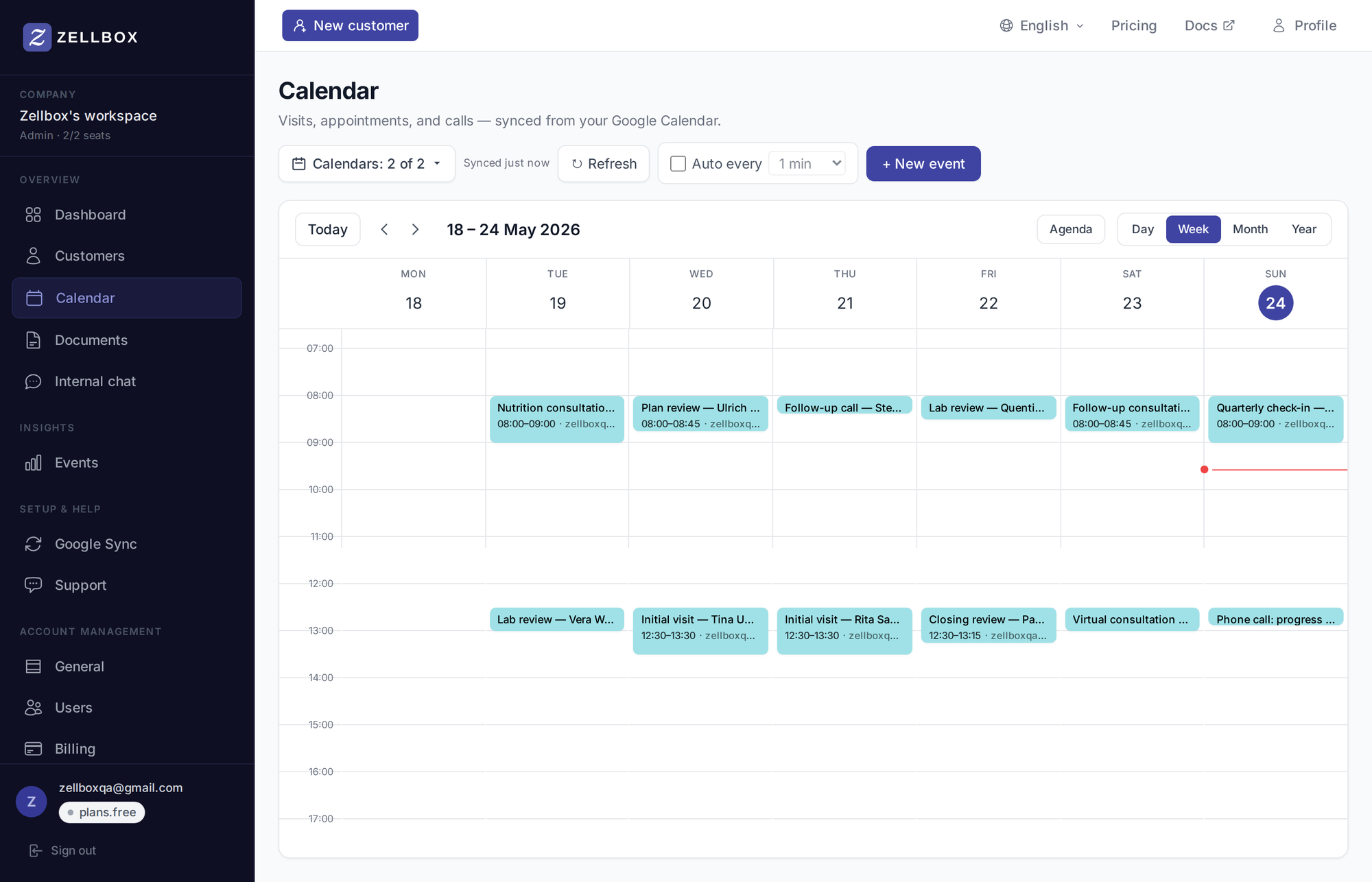
The single biggest fix: at the end of every annual visit, book the next annual visit AND book all four quarterly antiparasitic visits in the calendar. Don’t say “we’ll send a reminder when it’s time.” Book the events.
- Annual vaccine slot: 12 months from today, same week, same practitioner if possible.
- Antiparasitic slots: 3, 6, 9, and 12 months from today.
The owner walks out with five future appointments on their calendar (synced to their phone via the calendar invite they get by email). They don’t have to remember anything. The reminders fire on schedule, and the recall booking rate goes from “whoever-remembers” to 90 %+ because the appointment already exists.
2. Two reminders per visit. Same cadence for both cycles.
The reminder cadence that works for vet:
- 7 days before — the owner has time to reschedule if life intervened.
- 24 hours before — the last-call reminder for the ones who let it slip.
Three or more reminders is spam; one is too few. Apply the same cadence to both the annual and the quarterly cycle — the owner learns the rhythm.
3. Capture consent — and split it for marketing vs operational
Vet practices in the EU operate under GDPR (and equivalent regimes in the UK, Spain, France, Germany). Preventive recall is operational communication; the practice’s seasonal promotional offers are marketing. The patient (the owner) must consent to both, separately.
In Zellbox, consent is a first-class concept:
- Operational consent — for the recall reminders. Required for the protocol to run.
- Marketing consent — for the seasonal offers (“10 % on annual dental for September”). Optional, separately recorded.
- Each is a separate signed document in the owner’s file. When the regulator audits, both are timestamped and retrievable.
4. Use a Meta-approved template
The WhatsApp Business API requires pre-approved templates for outbound messages outside the 24-hour service window. The vet recall template Zellbox ships from day one:
Reminder — preventive visit for Bella
Hi Maria,
Bella’s annual vaccination with Dr. Chen is scheduled for Tuesday, July 14th at 10:00 AM. 📍 22 Park Road
See you then.
— Sent by Zellbox
Variables (owner name, pet name, service, practitioner, date and time, address) fill from the Google Calendar event and the patient file. The pet’s name appears explicitly in the message body because that’s the personalisation lever that moves vet recall booking rates the most — the owner reads “Bella” and the message lands.
5. The lapsed-recall sweep
The hardest discipline: a monthly sweep of pets whose preventive cycle has slipped.
Open the patient list filtered by “next preventive visit > 60 days overdue.” Every name on that list is a pet the practice is at risk of losing. The front desk runs the lapsed-recall messaging once a month:
Hi Maria,
We noticed Bella’s annual vaccination is due — it’s been 14 months since the last one. Here are three slots that fit Bella’s usual Tuesday morning:
• Tuesday Oct 22, 10:00 AM • Tuesday Oct 29, 10:00 AM • Wednesday Oct 30, 11:00 AM
Reply with a number or pick one above.
This catches the pets that fell through the system — the ones whose owner cancelled and never rebooked, the ones whose calendar event got deleted, the ones whose practitioner left. Recovering 60 % of the lapsed-recall list is normal; that’s where the lifetime-value math really pays off.
Errors that erode vet recall
A few patterns we see when practices come from a paper-and-phone system:
- “We’ll call you when it’s time.” This is the most common, most expensive failure. The call doesn’t happen because the front desk is buried; the owner doesn’t know to expect it; the pet doesn’t get booked. Replace with calendar events at the end of the previous visit.
- One reminder, not two. Practices send the 24-hour reminder and skip the 7-day. They lose the patients who needed the reschedule window.
- The reminder coming from the receptionist’s personal phone. Works for 20 reminders a week. With 200 a week it breaks — and when she’s off, nobody can read the replies. No audit trail for the regulator either.
- Mixing marketing into the operational recall. “Reminder: Bella is due — and 15 % off dental this month!” reclassifies the whole message as marketing in Meta’s quality system. The recall reminder gets throttled across the entire patient base.
- Not surfacing the lapsed list. If the lapsed list isn’t a saved filter on the patient view, no one runs the sweep. The pets attrite silently and the practice doesn’t notice until the year-end revenue comparison.
How Zellbox handles the five steps
Every step is wired in by default:
- Two reminders fire automatically at 7 days and 24 hours before every preventive visit in your Google Calendar.
- The annual + quarterly cycle slots are bookable as a single end-of-visit workflow (“book the next 5 slots”) instead of one at a time.
- Operational consent and marketing consent are separate document types; the recall reminders only fire to pets whose owners have operational consent on file.
- A Meta-approved template ships on day one; the pet’s name is a first-class variable for personalisation.
- The lapsed-recall filter is a saved view on the patient list — the front desk runs it on the first Monday of every month.
Setup takes about 12 minutes: 2 to create your Zellbox workspace and 10 to connect your WhatsApp Business number through Meta’s Embedded Signup.
→ Start free with Zellbox (Starter is free forever, no card required) → Full veterinary-sector page: /clinics-veterinary/ → Sibling post: GDPR + HIPAA checklist for clinics: 12 audit points → The CRM that unifies WhatsApp, Gmail, and Google Calendar: zellbox.com
The bottom line
Vet recall is not a marketing problem. It’s a calendar discipline problem layered on the right messaging channel for the owner’s habit. Book both cycles at the end of every visit, fire the reminders on a 7-day + 24-hour cadence in WhatsApp, run a lapsed-recall sweep every first Monday of the month. Do that and the practice recovers real preventive revenue every year — plus the curative work that compounds for a decade behind it.
If you’d rather have the protocol running on rails than tracked in a spreadsheet, that’s what Zellbox is for.
About the author: Nacho Coll is the founder of Zellbox. He writes about automating WhatsApp Business workflows for visit-driven small businesses — clinics, salons, vets, fisio, aesthetics, dental.
Clinics already running a full vet PMS like Petabyte can bridge this same recall protocol through WhatsApp — see our Petabyte alternative breakdown for how the two layers fit together.
For the cost math behind switching your recall channel, see why postal mailings cost multiples more than WhatsApp for vaccination recall. Comparing PMS options too? See how Vet-One / VetPort compares to Zellbox for the WhatsApp + calendar layer specifically.
Frequently asked questions
Why does vet recall fail differently from human-medicine recall?
How much revenue does a vet practice recover by improving WhatsApp recall?
How many recall reminders should be sent per visit?
About the author
Nacho Coll
Founder & Engineer at Zellbox
Nacho founded Zellbox to give appointment-driven small businesses — clinics, salons, spas, physio, aesthetics, vets, mental-health, and fitness studios — a WhatsApp-first calendar and customer record system. Writes about WhatsApp Business automation, no-show economics, recall-cycle playbooks, and the operational realities of running visit-driven businesses at scale.